





















What Is Extra Virgin Olive Oil?
Extra virgin olive oil is a high-quality olive oil obtained directly from olives using only mechanical methods. The quality and character of the oil are influenced by several factors, including the olive variety, the region where the olives are grown, the harvest time, and the way the olives are processed after harvesting. Carefully produced extra virgin olive oil preserves the natural aroma and distinctive flavor of the olives, making it a versatile ingredient for both cold and hot dishes.
How Is Extra Virgin Olive Oil Produced?
The production process begins in the olive grove. Olives are harvested at the right time and transported to the production facility as carefully as possible. It is important to minimize the time between harvesting and processing, as the condition of the olives directly affects the final quality of the oil.
During production, the olives are cleaned, crushed, and mechanically processed to separate the oil from the other components. Careful production methods aim to preserve the natural properties, aromas, and distinctive character of the olives as much as possible.
What Are the Characteristics of Extra Virgin Olive Oil?
The flavor of extra virgin olive oil can vary considerably. Some oils are smooth and fruity, while others may have a more intense character with slightly bitter or pleasantly peppery notes.
These differences are influenced by factors such as the olive variety, climate, soil, harvest time, and production method. Early-harvest olives, for example, can produce a fresher and more distinctive flavor, while riper olives generally result in a smoother and rounder taste. This natural variation is precisely what makes olive oil a unique product with its own individual character.
How Can You Use Extra Virgin Olive Oil?
Extra virgin olive oil is extremely versatile in the kitchen. It can be served directly with fresh bread, salads, mezze, cheeses, and cold appetizers, while also complementing vegetables, pasta, fish, meat, and a wide variety of hot dishes.
A small amount of olive oil can also be drizzled over a dish just before serving to enhance its flavor. The most suitable olive oil depends on both the dish and personal preference. A mild olive oil, for example, pairs well with delicate dishes, while a more robust oil can add greater character to grilled vegetables, salads, and Mediterranean cuisine.
How Can You Recognize Good Extra Virgin Olive Oil?
When choosing olive oil, it is worth looking beyond the design of the bottle or packaging. The origin of the olives, harvest time, production method, and information about the producer can provide important indications of the oil's quality and character.
Aroma and flavor also play an important role. Good olive oil may offer fresh, fruity, and herbaceous aromas and, depending on the olive variety, can develop smooth, slightly bitter, or mildly peppery notes. Since every olive variety and harvest can be different, high-quality olive oil does not necessarily taste exactly the same every time.
How Should You Store Extra Virgin Olive Oil?
Proper storage helps preserve the quality, flavor, and aromas of olive oil for as long as possible. Olive oil is sensitive to light, heat, and prolonged exposure to air. It should therefore be stored tightly sealed in a cool, dark place.
Locations directly next to a stove, oven, or sunny window are less suitable. Packaging also plays an important role. Dark glass bottles or suitable metal containers help protect the oil from light. Once opened, the container should always be properly closed and the olive oil should be consumed within an appropriate period.
Extra Virgin Olive Oil from the Aegean Region
The Aegean region has a long history of olive cultivation and olive oil production. Its climate, soil, and local olive varieties give olive oils from the region their distinctive character.
Around the Kaz Mountains and Edremit, olives have been an important part of local agriculture and food culture for generations. The characteristics of the olives, the time of harvest, and the way they are processed ultimately determine the aroma, flavor, and intensity of the resulting olive oil.
From the Olive Grove to Your Table with NISH
NISH combines the region's olive-growing tradition with a careful approach to production. From the moment of harvest, attention is given to the handling and processing of the olives in order to preserve their natural character as much as possible.
Different harvest times and production methods create olive oils with a variety of flavor profiles and uses within the NISH range. This makes it possible to choose a suitable olive oil for different dishes and personal preferences. From the olive groves of the Aegean region to your table, NISH places the natural character of the olive at the heart of every product.
Early Harvest Olive Oil
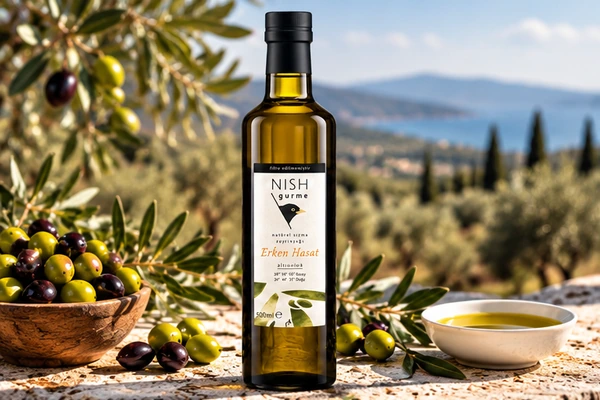
Early harvest olive oil is made from olives picked before they are fully ripe. At this stage, the olives are usually still green or just beginning to change from green to purple. The early harvesting period has a noticeable influence on the aroma, fragrance, and flavor profile of the olive oil. At this stage, olives generally contain less oil than fully ripe fruits, meaning more olives may be needed to produce the same amount of olive oil. In return, early harvest olive oil is often appreciated for its fresh, distinctive, and full-charactered flavor.
What Is Early Harvest Olive Oil?
The term early harvest olive oil primarily refers to the time when the olives are picked. Instead of waiting until the fruits are fully ripe, they are harvested earlier in the season. The exact timing varies depending on the olive variety, climate, and conditions in the olive grove.
Choosing an early harvest is a deliberate decision aimed at achieving a particular flavor profile. The resulting olive oil can have fresh, green, and fruity aromas and is often characterized by a slight bitterness or pleasant peppery note.
How Is Early Harvest Olive Oil Produced?
Careful production begins with selecting and harvesting the olives at the right time. After harvesting, it is important that the fruits are transported carefully and processed without unnecessary delay.
The olives are cleaned and then mechanically processed to separate the oil from the other components of the fruit. Throughout this process, attention is given to conditions that help preserve the natural aroma and character of the olives. Not only the early harvest itself, but also the speed and care taken during processing ultimately influence the quality and flavor of the olive oil.
What Is the Difference Between Early and Ripe Harvest Olive Oil?
The main difference between early harvest and ripe harvest olive oil is the stage at which the olives are picked. Early-harvest olives are not yet fully ripe and often have a greener color. As a result, the olive oil produced from them can have a more intense, fresher, and more distinctive flavor.
With a ripe harvest, the olives remain on the tree longer and generally contain more oil. Olive oil produced from riper olives often has a smoother and rounder flavor profile. Neither type is automatically better than the other; the choice mainly depends on personal taste and how the olive oil will be used in the kitchen.
What Does Early Harvest Olive Oil Taste Like?
The flavor profile can vary depending on the olive variety, the region where the olives are grown, and the exact time of harvest. Fresh and green aromas are often characteristic, with notes that may be reminiscent of freshly cut grass, green plants, or other herbaceous tones.
A slight bitterness and a pleasantly peppery sensation can also be part of the oil's natural character. The intensity of these characteristics varies from one harvest and product to another. This natural variation makes early harvest olive oil particularly interesting for those looking for an olive oil with a distinctive and recognizable character.
How Can You Use Early Harvest Olive Oil?
Early harvest olive oil is particularly suitable for dishes where the flavor of the oil itself is intended to stand out. It can be served directly with fresh bread, salads, mezze, tomatoes, cheeses, and various cold appetizers.
A small amount can also be added to grilled vegetables, fish, pasta, or other dishes just before serving. This helps preserve its distinctive aroma. The best combination naturally depends on the intensity of the oil and your personal preferences. A robust early harvest olive oil, for example, can add extra character to even the simplest dishes.
How Should You Store Early Harvest Olive Oil?
Proper storage is important for preserving the original flavor and aromas for as long as possible. Olive oil can be affected by light, heat, and prolonged exposure to air. It should therefore be kept tightly sealed in a cool and dark place.
Avoid storing olive oil directly next to a stove, oven, or window exposed to strong sunlight. Dark glass bottles or suitable metal containers provide additional protection from light. Always close the bottle or container properly after use and avoid exposing the oil to high temperatures for extended periods.
Early Harvest Olives from the Aegean Region
Turkey's Aegean region has a centuries-old tradition of olive cultivation. Around Edremit and the Kaz Mountains, olive trees are also an important part of the landscape and local production culture.
The climate, soil, olive varieties, and selected harvest time all contribute to the character of olive oil from this region. By harvesting olives early in the season and processing them carefully, it is possible to produce an olive oil in which the fresh and distinctive character of the fruit is clearly expressed.
NISH Early Harvest Olive Oil
At NISH, the natural character of the olive is at the heart of the production approach. For early harvest olive oil, the olives are collected at a carefully selected stage and then processed with attention to preserving their distinctive qualities.
From the olive grove to the final packaging, every effort is made to maintain the characteristic aroma and flavor of the olives. The result is a NISH olive oil with a fresh and recognizable flavor profile that can be enjoyed directly at the table or used with a wide variety of dishes.
In this way, NISH brings the olive-growing tradition of the Aegean region and the Kaz Mountains into the everyday kitchen.
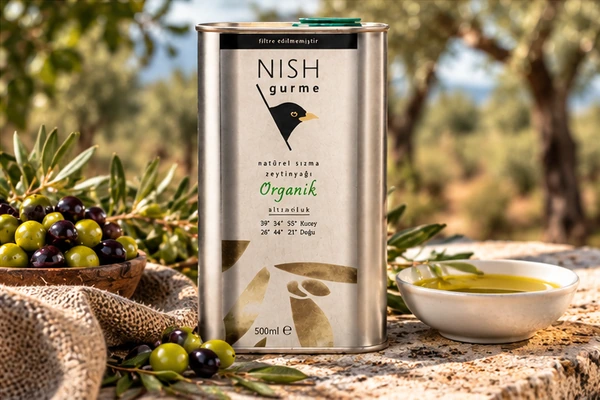
Natural Extra Virgin Olive Oil
Natural extra virgin olive oil represents the pure flavor and character of carefully selected olives. The final quality is determined not only by the production method, but by the entire process: from the olive grove and the right harvest time to processing, packaging, and storage. The olive variety, climate, and soil also influence the aroma, flavor, and intensity of the oil. For this reason, natural olive oil can have different aromas and flavor profiles depending on the region, harvest year, and olive variety.
How Can You Recognize Natural Olive Oil?
Good natural olive oil cannot be identified by color alone. Its color can range from green to golden yellow and is influenced by factors such as the olive variety and harvest time. Aroma and flavor provide much more information about the character of the oil.
Carefully produced olive oil can have fresh, fruity, and herbaceous aromas and, depending on the olives used, may taste smooth, slightly bitter, or pleasantly peppery. Information on the packaging about the origin, producer, harvest, and production method can also help you make an informed choice.
Why Is Harvest Time Important?
The time at which olives are harvested has a significant influence on the final flavor profile. Olives picked early in the season are usually still green and can produce a more intense, fresher, and more distinctive olive oil.
As the olive ripens, not only does the color of the fruit change, but also its flavor and oil content. Riper olives can produce a smoother and rounder olive oil. The right harvest time therefore depends on the olive variety and the character the producer wants to achieve in the final oil.
Why Is the Production Process Important?
After harvesting, an equally important stage begins. The olives must be handled carefully and processed without unnecessary delay. During production, the olives are first cleaned and then mechanically processed to separate the oil from the other components of the fruit.
Every step can influence the aroma and flavor of the final product. Careful processing is therefore essential to preserve the natural character of the olives as much as possible. At NISH, this attention to the entire process is an important part of the production approach.
How Can You Use Natural Extra Virgin Olive Oil?
Natural extra virgin olive oil is highly versatile and can be used both at the table and in the preparation of a wide variety of dishes. It pairs particularly well with salads, mezze, fresh bread, vegetables, cheeses, and cold appetizers.
Olive oil can also be used with pasta, fish, meat, and various hot dishes. Drizzling a small amount over a dish just before serving can help bring out the aroma of the olive oil more clearly. The best choice depends on the dish: a mild olive oil complements delicate flavors, while a more intense oil can add greater character.
What Should You Look for When Buying Olive Oil?
When buying olive oil, it is advisable to look beyond price and packaging. Whenever possible, check the origin, product category, producer, and other available product information.
The packaging itself is also important. Olive oil is sensitive to light, heat, and air, so dark glass bottles or suitable metal containers can provide additional protection. A reliable producer provides clear information about the product and its origin. Comparing these details can help you choose an olive oil that suits both your taste and intended use in the kitchen.
How Should You Store Natural Olive Oil?
Proper handling remains important after purchase. Store olive oil in a cool, dark place and protect the container from direct sunlight and strong sources of heat. A cupboard away from the stove or oven, for example, is more suitable than a location directly next to the cooking area.
Always close the container tightly after use to minimize prolonged exposure to air. Proper storage helps preserve the original aroma, flavor, and quality of the olive oil throughout its use.
Olive Oil from the Aegean Region
Turkey's Aegean region has a long tradition of olive cultivation and olive oil production. Around Edremit and the Kaz Mountains, olive trees have been part of the landscape and local culture for generations.
The combination of regional olive varieties, soil, climate, and traditional knowledge gives olive oil from this area its distinctive character. At the same time, every harvest is unique. Differences in weather conditions, harvest time, and processing can cause the aroma and flavor to vary slightly from year to year.
From the Olive Grove to Your Table with NISH
NISH combines the olive-growing tradition of the Aegean region with a production approach centered on careful treatment of the olives. From determining the right harvest time to processing and packaging, attention is given to preserving the natural character of the olives.
Within the NISH range, different harvest times and production methods create a variety of flavor profiles, making it possible to select a suitable olive oil for different dishes and preferences. In this way, NISH brings the flavor and character of the olive groves around the Kaz Mountains and Edremit from the olive grove to your table.
Stone-Pressed Olive Oil
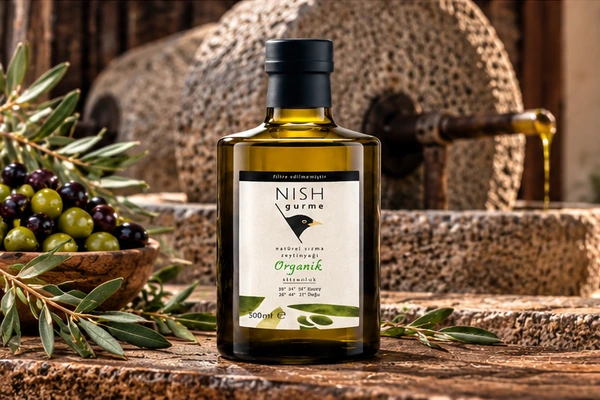
Stone-pressed olive oil refers to a traditional production method in which olives are crushed using stones. This method is part of the long history of olive oil production in the Mediterranean region and is still appreciated today for its traditional character. However, the quality and flavor of stone-pressed olive oil are not determined by the method alone. The quality of the olives, harvest time, processing speed, storage, and production conditions also play an important role. At NISH, this traditional approach is combined with careful attention to quality and the natural character of the olive.
What Is Stone-Pressed Olive Oil?
In the traditional stone-pressing method, olives are crushed using large stones to create an olive paste. The oil is then extracted from this paste. The term therefore primarily refers to the way the olives are processed during part of the production process.
Stone-pressed olive oil is often associated with artisanal olive oil production and techniques that have been used for generations in traditional olive-growing regions. The final character of the oil depends greatly on the olive variety, the ripeness of the fruit, and the care taken throughout the entire production process.
How Is Stone-Pressed Olive Oil Produced?
Production begins with carefully harvested olives that are transported to the production facility after picking. Leaves and other unwanted materials are first removed, and the olives are cleaned. The fruits are then traditionally crushed with stones to form a paste.
The oil must then be separated from the water and solid components of the olives. Although stone pressing adds a traditional element to the process, careful and hygienic handling remains important throughout every stage of production. The aim is to produce an olive oil that expresses the natural character of the olives as clearly as possible.
What Makes Stone-Pressed Olive Oil Special?
For many olive oil enthusiasts, the appeal of stone-pressed olive oil lies in its combination of tradition, craftsmanship, and the character of the olives used.
The method recalls a time when olive oil was produced on a smaller scale and knowledge of olive cultivation and processing was passed down from generation to generation. However, the term “stone-pressed” alone does not automatically mean that an olive oil is better than one produced using another method.
The final quality depends on the entire process, from the condition of the olives at harvest to their processing, packaging, and storage.
What Does Stone-Pressed Olive Oil Taste Like?
The flavor profile of stone-pressed olive oil can vary considerably. The olive variety, harvest time, and region where the olives are grown all influence its aroma and taste.
Depending on these factors, the oil may be smooth and rounded or have a more distinctive, fruity, and full-bodied profile. A slight bitterness or pleasant peppery note may also be present.
For this reason, stone-pressed olive oil should not be associated with one specific flavor. Each harvest and production can have its own nuances, allowing the natural differences between olives to remain recognizable.
How Can You Use Stone-Pressed Olive Oil?
Stone-pressed olive oil can be used in many different ways in the kitchen. It is particularly suitable for dishes where the aroma of the olive oil is intended to be noticeable.
It pairs well with fresh bread, salads, mezze, tomatoes, cheeses, and grilled vegetables. A small amount can also be drizzled over pasta, fish, vegetables, or other dishes just before serving.
In this way, olive oil is used not only as an ingredient but also as a finishing touch that adds flavor and character. The best pairing depends on the intensity of the oil and, of course, your personal preferences.
What Should You Look for When Buying Stone-Pressed Olive Oil?
When choosing stone-pressed olive oil, it is advisable not to focus solely on the term “stone-pressed.” You should also consider information about the origin of the olives, the producer, harvest time, and product category.
Clear labeling helps you better understand the product you are purchasing. Packaging also plays an important role. Because olive oil is sensitive to light, heat, and air, dark glass bottles and suitable metal containers can provide effective protection.
Reliable product information, appropriate packaging, and careful production together provide a more complete picture of the olive oil.
How Should You Store Stone-Pressed Olive Oil?
To preserve its flavor and aromas for as long as possible, olive oil should be stored properly. Keep the container in a cool, dark place and avoid direct sunlight.
The oil should preferably not be stored directly next to an oven, stovetop, or other source of heat. Always close the bottle or container tightly after use to limit prolonged exposure to air.
Proper storage is important for every type of olive oil, regardless of the production method, and helps preserve the product's original character throughout its use.
Traditional Olive Oil from the Aegean Region
Turkey's Aegean region has a long history of olive cultivation and olive oil production. Around Edremit and the Kaz Mountains, olives are also closely connected to the local agricultural culture.
Traditional production methods form part of this history and reflect knowledge developed and passed down through generations in olive-growing regions. Local olive varieties, soil, climate, and the chosen harvest period all contribute to the character of the oil and make each production season unique.
NISH Stone-Pressed Olive Oil
NISH combines the traditional stone-pressing method with a careful approach to olive oil production. The olives are selected and processed with attention to their natural character and the traditions of the region.
Because this distinctive production method is used for limited quantities within the NISH range, stone-pressed olive oil holds a special place in the collection. From the olive groves around the Kaz Mountains and Edremit to the final packaging, the natural character of the olive remains at the heart of the process.
In this way, NISH offers an olive oil that brings together regional olive cultivation, traditional production knowledge, and a distinctive flavor profile.
Olive Oil from Ripe Harvested Olives
Olive oil from ripe harvested olives is produced from olives that are allowed to ripen longer on the tree before being picked. During the ripening process, the color of the olive gradually changes from green to purple and eventually to darker shades. At the same time, the flavor profile of the fruit also changes. Compared with early-harvest olives, riper olives generally produce a smoother, rounder, and more balanced olive oil. This makes it particularly suitable for people who prefer a milder flavor that is easy to pair with a wide variety of dishes.
What Is Olive Oil from Ripe Harvested Olives?
The term ripe harvest refers to the stage at which the olives are collected. With this production approach, the fruits remain on the tree longer, allowing the natural ripening process to continue.
As the olive ripens, both its composition and aroma change. This directly influences the resulting olive oil. The exact harvest time is determined by several factors, including the olive variety, climate, weather conditions, and desired flavor profile. A carefully timed ripe harvest can produce a harmonious olive oil with a pleasantly smooth and approachable taste.
How Is Ripe Harvest Olive Oil Produced?
Production begins with the careful harvesting of olives that have reached the desired level of ripeness. After harvesting, the olives are transported to the production facility, where leaves and other unwanted materials are removed.
The olives are then cleaned and mechanically processed to separate the oil from the other components of the fruit. Even with ripe harvested olives, it is important to avoid unnecessary delays between harvesting and processing. A carefully organized production process helps preserve the natural aroma and character of the olives in the final oil.
What Is the Difference Between Early and Ripe Harvest?
The main difference lies in the stage at which the olives are picked from the tree. Early-harvest olives are usually green or just beginning to change color. The oil produced from them often has a fresher, more intense, and more distinctive character.
Ripe harvested olives have had more time to develop on the tree and can produce a smoother and rounder olive oil. The oil yield may also differ, as riper olives generally contain more oil. Which type is the better choice depends mainly on personal taste, the dish, and how the olive oil will be used.
What Does Olive Oil from Ripe Harvested Olives Taste Like?
Ripe harvest olive oil is often characterized by a smooth, balanced, and approachable flavor. Compared with a distinctive early harvest oil, bitterness and peppery notes may be less prominent.
Depending on the olive variety and region, fruity, ripe, and subtle herbaceous aromas may be noticeable. However, the flavor profile varies with each harvest and production. Soil, climate, weather conditions, and the exact harvest time all play a role. As a result, every olive oil can have its own character, even when the same olive variety is used.
How Can You Use Ripe Harvest Olive Oil?
Thanks to its smoother character, olive oil from ripe harvested olives is highly versatile in the kitchen. It can be used with salads, mezze, vegetables, and cold appetizers, while also pairing well with pasta, fish, meat, and a variety of hot dishes.
Because its flavor is generally less dominant, this olive oil can be easily combined with ingredients whose original flavors you want to preserve. It can also be served directly with bread or used as a finishing touch over prepared dishes. This makes ripe harvest olive oil a practical choice for everyday use.
Who Is Ripe Harvest Olive Oil Suitable For?
This olive oil is particularly suitable for people who appreciate a smooth and balanced olive oil flavor. Those looking for a powerful, green, and more distinctive oil may prefer an early harvest variety.
On the other hand, anyone looking for an approachable olive oil that can be easily used with different dishes may prefer a ripe harvest. Both types have their own character and can be used alongside each other in the kitchen. This allows you to choose either a more intense or a milder olive oil depending on the dish.
How Should You Store Ripe Harvest Olive Oil?
Proper storage helps preserve the original qualities of olive oil for longer. Light, heat, and prolonged exposure to air can affect its quality. The container should therefore be kept tightly sealed in a cool, dark place.
Avoid storing olive oil next to a stove, oven, or window exposed to direct sunlight. Dark glass bottles and suitable metal containers help protect the contents from light. Always close the container properly after use and treat olive oil as a fresh product whose aroma and flavor are best preserved through careful storage.
Ripe Harvest from the Aegean Region
Turkey's Aegean region has a long tradition of olive cultivation. Around Edremit and the Kaz Mountains, olive groves have been part of the landscape for generations.
The regional climate, soil, and characteristics of the olive varieties used all contribute to the character of the resulting oil. Allowing the olives to ripen longer on the tree creates a different flavor profile from an early harvest. This means that the same olive-growing region can offer different options for those who enjoy both robust and milder olive oils.
NISH Olive Oil from Ripe Harvested Olives
At NISH, the harvest time is selected according to the desired character of the olive oil. For the ripe harvest, olives that have progressed further in their natural ripening process are selected and then carefully processed.
The result is an olive oil with a smooth, balanced, and versatile flavor suitable for a wide range of culinary uses. From the olive groves around the Kaz Mountains and Edremit to the final packaging, preserving the natural character of the olive remains at the heart of the process.
NISH Olive Oil from Ripe Harvested Olives therefore offers an approachable choice for everyday use and for dishes where a harmonious olive oil flavor is desired.
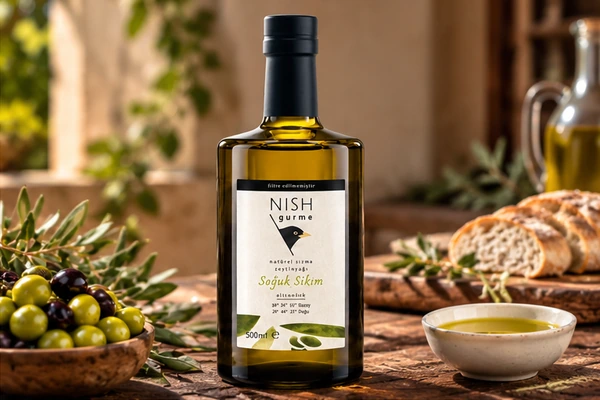
Cold-Pressed Olive Oil
Cold-pressed olive oil is produced with the aim of preserving the natural aroma and character of the olives as much as possible during processing. The term “cold-pressed” is commonly used for olive oil processed under controlled temperatures during the extraction process. However, temperature is not the only important factor. The quality and freshness of the olives, harvest time, the time between harvesting and processing, and the way the oil is subsequently stored all influence the final result. When the entire process is carried out carefully, the distinctive aromas and flavors of the olives can remain clearly recognizable in the resulting olive oil.
What Is Cold-Pressed Olive Oil?
Cold-pressed olive oil involves a mechanical production process in which unnecessarily high temperatures are avoided. After harvesting, the olives are cleaned, crushed, and further processed to separate the oil from the water and solid components of the fruit.
The aim is to handle the natural properties of the olives carefully throughout these stages. The term “cold-pressed” is widely used in everyday language, although modern olive oil production often uses mechanical extraction systems rather than traditional presses. For consumers, therefore, not only the terminology but also the quality of the olives and the care taken throughout the entire production process are important.
How Is Cold-Pressed Olive Oil Produced?
Production begins in the olive grove. The olives are harvested at an appropriate time and then transported to the production facility. Leaves, twigs, and other unwanted materials are removed before the olives are cleaned.
The fruits are then crushed into a paste. During the subsequent processing stages, the oil is mechanically separated from the other components. In cold extraction, attention is paid to the temperature throughout the process.
At the same time, it is important that the olives are not left waiting unnecessarily after harvesting. High-quality olives, prompt processing, and controlled production conditions together form the basis for quality olive oil.
Why Is Temperature Important During Production?
Temperature is one of the factors that can influence the characteristics of olive oil. During processing, conditions are therefore carefully managed to preserve the natural aromas of the olives as much as possible.
Higher processing temperatures may affect the amount of oil extracted, but they can also influence certain aroma and flavor characteristics. In a carefully controlled cold extraction process, the focus is therefore not only on the quantity of oil obtained from the olives, but also on the desired character and quality of the final product.
What Does Cold-Pressed Olive Oil Taste Like?
There is no single flavor profile that applies to all cold-pressed olive oils. The flavor is strongly influenced by the olive variety, harvest time, region, and ripeness of the fruit.
Cold-pressed olive oil can be fresh and fruity, but may also have smooth, green, slightly bitter, or pleasantly peppery notes. Early-harvest olives, for example, can produce a more intense character than riper olives.
As a result, different cold-pressed olive oils can vary considerably in flavor, even when similar extraction methods are used.
What Is the Difference Between Cold-Pressed and Early Harvest Olive Oil?
These terms are sometimes confused, but they describe two different aspects of olive oil. “Early harvest” refers to the time when the olives are picked from the tree. “Cold-pressed” or cold extraction refers to the way the olives are processed during production.
An early-harvest olive can therefore be processed using cold extraction, but riper olives can also be processed at a controlled low temperature. One term describes the harvest time, while the other describes the production process. The combination of harvest time and processing method ultimately influences the flavor profile of the olive oil.
How Can You Use Cold-Pressed Olive Oil?
Cold-pressed olive oil is versatile and can be used with a wide variety of dishes. It is particularly suitable for applications where the aroma of the oil can be fully appreciated, such as salads, mezze, fresh bread, tomatoes, cheeses, and cold appetizers.
A small amount of olive oil can also be drizzled over grilled vegetables, pasta, fish, or other prepared dishes just before serving. Depending on its flavor profile, the oil can also be used in various hot dishes.
A milder olive oil can complement delicate ingredients, while a more intense variety can add extra character to a dish.
What Should You Look for When Buying Cold-Pressed Olive Oil?
When buying cold-pressed olive oil, it is advisable to look beyond the words on the front of the packaging. Check the product category, origin, producer, contents, and other available information on the label.
The packaging itself also deserves attention. Olive oil is sensitive to light, heat, and prolonged exposure to air. Dark glass bottles and suitable metal containers can therefore help protect the oil from light.
Clear and transparent product information also makes it easier to compare different types of olive oil.
How Should You Store Cold-Pressed Olive Oil?
Proper storage after purchase is important for preserving the aroma and flavor of olive oil for as long as possible. Keep the container in a cool, dark place away from direct sunlight and sources of heat.
A kitchen cupboard that is not directly next to the stove or oven is a suitable location. Always close the container tightly after use to minimize prolonged exposure to air.
Rather than keeping olive oil next to the cooking area for decorative purposes, storing it in a protected location is better for preserving its original characteristics.
NISH Cold-Pressed Olive Oil
NISH combines the olive-growing tradition of the Aegean region with a careful approach to harvesting and production. During processing, preserving the natural character and distinctive aroma of the olives remains a central priority.
The origin of the olives, the selected harvest time, and controlled processing together contribute to the final flavor profile. In this way, NISH Cold-Pressed Olive Oil combines the tradition of the olive groves around Edremit and the Kaz Mountains with a production process centered on careful treatment of the olive.
Riviera Olive Oil
Riviera olive oil is a versatile olive oil particularly suitable for everyday cooking and the preparation of hot dishes. In Turkey, “Riviera” is a well-known olive oil category consisting of a blend of refined olive oil and olive oil obtained directly from olives. As a result, Riviera olive oil generally has a milder and more neutral flavor profile than extra virgin olive oil. This makes it a practical choice for dishes where olive oil is part of the cooking process but does not necessarily need to provide a distinctive flavor. NISH Riviera Olive Oil therefore offers an accessible and versatile option for a wide range of everyday culinary uses.
What Is Riviera Olive Oil?
Riviera olive oil differs from extra virgin olive oil in terms of composition and production method. Extra virgin olive oil is obtained directly from olives using mechanical methods, while Riviera olive oil is a combination of refined olive oil and olive oil obtained directly from olives.
The refining process gives the oil a more neutral character. By combining refined olive oil with olive oil obtained directly from olives, a mild-tasting product is created that can be used in many different dishes. Riviera is therefore particularly suitable for consumers looking for a practical and versatile olive oil for everyday cooking.
What Is the Difference Between Riviera and Extra Virgin Olive Oil?
The main differences lie in the product category, composition, and flavor. Extra virgin olive oil is obtained directly from olives and is known for its distinctive aroma and flavor profile. Depending on the olive variety and harvest time, it may have fruity, green, slightly bitter, or pleasantly peppery notes.
Riviera olive oil generally has a milder and more neutral flavor due to its composition. Extra virgin olive oil can therefore be chosen when the natural aroma of the olive is intended to play a noticeable role in a dish, while Riviera olive oil is particularly practical when a milder olive oil flavor is preferred.
What Does Riviera Olive Oil Taste Like?
Riviera olive oil generally has a mild, smooth, and approachable flavor. Its aroma is usually less pronounced than that of extra virgin or early harvest olive oil.
This can be an advantage in dishes where the flavors of the other ingredients should remain the main focus. The oil complements the dish without dominating its overall flavor profile.
For people who prefer a less intense olive oil flavor, Riviera can therefore be a suitable choice. Its mild character also allows the same oil to be used in many different recipes.
How Can You Use Riviera Olive Oil?
Riviera olive oil is particularly suitable for everyday cooking and a variety of hot preparations. It can be used when preparing vegetables, meat, fish, pasta, rice dishes, and various oven-baked and pan-cooked dishes.
In Mediterranean and Turkish cuisine, Riviera olive oil can also serve as a practical base for recipes in which oil is used during the cooking process. Its mild flavor combines easily with herbs, vegetables, and other ingredients.
For cold dishes where the flavor of the olive oil itself is intended to stand out, an extra virgin or early harvest olive oil may be a more suitable choice.
Which Olive Oil Is Best for Which Dish?
Choosing between Riviera and extra virgin olive oil does not have to be complicated. When you want the natural aroma and character of the olive to be clearly noticeable, such as in salads, mezze, with fresh bread, or as a finishing touch, extra virgin olive oil is a natural choice.
For everyday hot dishes where a milder flavor is preferred, Riviera olive oil offers a versatile solution. Both types can therefore be used alongside each other in the same kitchen. The dish, preparation method, and your personal taste ultimately determine which olive oil is most suitable.
What Should You Look for When Buying Riviera Olive Oil?
Clear product information is also important when choosing Riviera olive oil. Check the product category, composition, producer, quantity, and origin information on the label.
It is important not to confuse Riviera olive oil with extra virgin olive oil, as they are different product categories. Clear labeling helps consumers make an informed choice based on how they intend to use the oil.
The packaging also deserves attention. Packaging that protects the oil from light and can be tightly sealed contributes to proper storage of the product.
How Should You Store Riviera Olive Oil?
Like other types of olive oil, Riviera olive oil should be protected from direct sunlight, excessive heat, and prolonged exposure to air. Keep the container tightly closed in a cool, dark place.
A kitchen cupboard away from the oven and stovetop is generally more suitable than a location directly next to a heat source or window. Always close the container carefully after use. Proper storage helps preserve the characteristics of the oil throughout its use.
Riviera Olive Oil for Everyday Use
One of the main advantages of Riviera olive oil is its versatility. In a household where different dishes are prepared every day, it is practical to have an olive oil that works well with a wide variety of ingredients and cooking methods.
Thanks to its milder flavor profile, Riviera olive oil can be used without strongly influencing the flavors of other ingredients. From vegetables and pasta to fish and meat dishes, Riviera olive oil can therefore become a practical part of everyday cooking.
NISH Riviera Olive Oil
NISH Riviera Olive Oil is designed as a versatile choice for hot dishes and everyday cooking. Within the NISH range, Riviera complements more distinctive olive oils such as extra virgin, early harvest, and cold-pressed varieties.
Depending on the dish and your personal preference, you can choose either a more intense olive oil flavor or the milder character of Riviera. By offering different olive oils for different culinary uses, NISH brings the versatility of the Aegean olive tradition to your kitchen.

